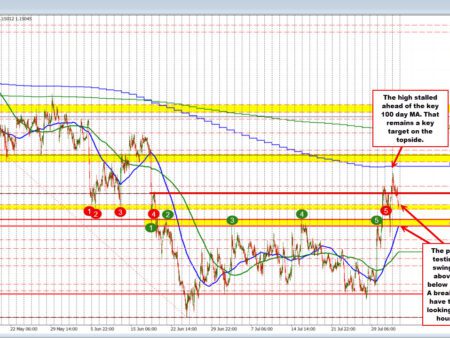
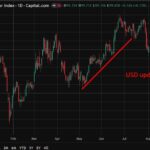
The USD is trading higher vs all the major currencies today on the day after the Fed decision where the Fed kept rates unchanged but the Fed members changed the projections for Fed rates at the end of the year with the Fed members now projecting 3.80% for the EOY rate up from 3.4% at the March meeting. In the video above, I take a look at the EURUSD, USDJPY and GBPUSD as each breaks from current ranges on the news.
The day after.
The first meeting of the Kevin Warsh Chair era is over and change is afoot, but the tilt was to more bearish.
Key Takeaways
- Fed holds rates unchanged, but new Fed Chair Kevin Warsh used the meeting to signal a broader overhaul of how the Federal Reserve operates.
- There will be five new task forces will be created to review major areas of Fed policy and operations, including:
- Communications strategy
- Inflation analysis
- Employment measures
- Data sources
- Broader policy processes
- The FOMC statement was dramatically shortened, shrinking to just 132 words, more than 300 words shorter than the previous statement. The streamlined approach helped produce a unanimous decision from a committee that had been showing internal divisions earlier in the year.
- The statement notably emphasized the Fed’s commitment to “deliver price stability” and removed any reference to maximizing employment, signaling a stronger focus on inflation control.
-
Markets interpreted the changes and in particular the changes to the dot plot as more hawkish than expected:
- The updated dot plot showed nine Fed officials expecting at least one rate hike in 2026, compared with none in the March projections.
- Expectations for near-term rate cuts faded.
- Despite speculation that Warsh might pursue lower rates after being appointed by President Trump, the meeting suggested the opposite: the Fed appears willing to tighten policy further if inflation remains stubborn.
- According to Capital Economics, the meeting leaves the door open for a potential rate hike as soon as September.
Bottom Line
The first Warsh-led meeting marked a significant shift in tone. The Fed simplified its communications, placed greater emphasis on fighting inflation, deemphasized employment concerns, and produced a dot plot that leaned noticeably more hawkish. Markets came away viewing the Fed as more likely to raise rates than cut them in the months ahead.
In other central bank news:
The Swiss National Bank left its policy rate unchanged at 0.00%, a decision that was widely expected by markets. While the SNB nudged its inflation forecasts slightly higher—seeing inflation at 0.6% in both 2026 and 2027 and 0.7% in 2028—officials emphasized that medium-term inflation pressures are “virtually unchanged” and remain consistent with price stability. Growth forecasts were left unchanged at 1.0% for 2026 and 1.5% for 2027, signaling confidence in the domestic outlook. A key takeaway was the SNB’s stronger commitment to intervene in foreign exchange markets if needed, reflecting concerns that a stronger Swiss franc could further dampen inflation. Overall, the decision was viewed as mildly dovish: the SNB sees inflation contained, remains comfortable with rates at zero, and is relying more on potential FX intervention than interest-rate hikes to manage economic risks amid ongoing uncertainty tied to the fragile situation in the Middle East. The USDCHF is trading at new highs for the year (lower CHF) on the intervention threats and the overall USD bullishness.
The Bank of England left its Bank Rate unchanged at 3.75%, as widely expected, with the vote split 7-2. While most policymakers felt inflation was continuing to ease and that existing restrictive policy was working its way through the economy, two members—Megan Greene and Chief economist Huw Pill—voted for a 25-basis-point rate hike due to concerns that higher energy prices could lead to stronger second-round inflation effects. The BoE lowered its inflation outlook for this year, noted that the labor market continues to soften, and said signs of weaker economic growth could help contain price pressures. However, officials emphasized that energy-price uncertainty remains a key risk and reiterated their readiness to act as needed to return inflation to the 2% target. Overall, the decision was largely a repeat of April’s message, with markets maintaining expectations for roughly 35 basis points of tightening by year-end, including a better-than-even chance of a rate hike in September. The GBPUSD is trading to new lows (see video above).
US yields are higher in the short end and lower in the longer end:
- 2 year yield 4.20%, +3.7 basis points
- 10 year yield 4.453%, -9.7 basis points
- 30 year yield 41869%, -520 basis points
The US stocks are trading higher with the chips and the Nasdaq leading the way to the upside
- Dow industrial average was 165 points
- S&P index +53 points
- NASDAQ index +419 points
- Crude oil is trading down 2.29% or $1.76 at $75.00