Introduction
The USD/JPY currency pair is one of the most traded currency pairs in the world, representing the exchange rate between the US dollar and the Japanese yen. Understanding its historical performance provides insights into global economic trends, market sentiments, and geopolitical influences. This article delves into the evolution of the USD/JPY exchange rate over the decades.
The 1980s: The Rise of the Yen
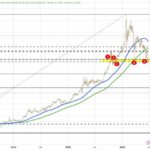
In the early 1980s, Japan experienced remarkable economic growth, leading to the appreciation of the yen. By the end of the decade, the USD/JPY rate fell from around ¥240 to approximately ¥120. This decade was characterized by Japan’s export-driven economy, which outperformed many Western economies.
The 1990s: A Stagnant Economy
The 1990s were marked by Japan’s economic stagnation, often referred to as the “Lost Decade.” The Bank of Japan implemented various monetary policies to combat deflation and stimulate the economy. As a result, the USD/JPY rate fluctuated, with the yen strengthening slightly towards the end of the decade, averaging around ¥100 to ¥120.
The 2000s: The Post-Bubble Era
The early 2000s saw Japan struggling with its economic policy after the asset bubble burst in the late 1980s. The USD/JPY ratio started around ¥120, but by 2007 it had risen to about ¥115, showcasing a stable currency relationship that reflected ongoing global economic shifts post-9/11 and the rise of China as an economic superpower.
The 2010s: Volatility and Intervention
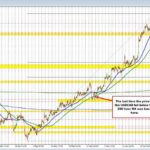
Throughout the 2010s, the USD/JPY pair experienced significant volatility due to various global events, including the European debt crisis and the massive quantitative easing (QE) policies by the Federal Reserve and the Bank of Japan. The yen weakened significantly, hitting an exchange rate of about ¥120 per USD by 2015 as Japan aimed to boost exports and revive its economy through monetary stimulus.
2020s and Beyond: Current Trends
The onset of the COVID-19 pandemic in 2020 brought unprecedented market turbulence. The USD/JPY rate fluctuated dramatically in early 2020, as investors sought the safety of the yen. By 2023, the USD/JPY exchange rate has been influenced by rising interest rates in the U.S., ongoing geopolitical tensions, and Japan’s commitment to its own monetary policies. As of now, traders continue to monitor central bank actions and inflation data closely.
Conclusion
The historical performance of the USD/JPY currency pair reflects not only the economic dynamics of the United States and Japan but also broader global trends. Understanding this historical context enables traders and investors to navigate future market movements with greater insight and strategy.